Tag: productivity

  • Recruiting 101: How to Find the Best Specialists for Your Team

    Recruiting 101: How to Find the Best Specialists for Your Team

    In today’s business environment, a company’s success heavily depends on its team. Recruitment is no longer just about hiring employees; it has become a strategic part of a company’s growth. Attracting the best specialists requires a clear plan, a systematic approach, and creativity. This article explores how to effectively organize recruitment, avoid common mistakes, and build a team that will help achieve business goals.

    Identifying Company Needs

    The first step in the recruitment process is understanding what specialists your company needs. This involves assessing business objectives, defining tasks that need to be accomplished, and identifying the skills required to achieve them. A clear job description is the foundation of successful recruitment. It should outline key responsibilities, required experience, and professional competencies. Additionally, it’s important to consider the company’s culture to ensure that the new hire integrates well with the team.

    Sources for Finding Candidates

    One of the most effective ways to find suitable specialists is by looking within the company. Internal recruitment allows for the development of in-house talent while boosting employee loyalty. If internal resources are insufficient, external sources should be considered. Popular platforms such as LinkedIn or specialized job boards provide excellent opportunities to attract candidates. Referral programs that encourage employees to recommend suitable candidates are also worth exploring. Participating in professional conferences and industry events allows for direct interaction with experts, simplifying the selection process.

    How to Attract Top Candidates

    To attract the best specialists, a strong employer brand is essential. The company should clearly communicate its values, benefits, and unique aspects of its corporate culture. A competitive offer goes beyond salary; it includes bonuses, professional development opportunities, and flexible working conditions. Crafting an appealing job posting is an art in itself. It should be specific yet engaging to capture the interest of top candidates and encourage them to apply.

    Evaluating Candidates

    Candidate selection is a critical phase of recruitment. A thorough review of resumes helps filter out those who don’t meet the requirements. During interviews, structured questions can assess not only professional skills but also cultural alignment. Practical assignments provide insights into how candidates solve real-world problems. Equally important is checking references, which helps avoid unpleasant surprises in the future.

    Onboarding New Employees

    The onboarding process plays a key role in ensuring long-term collaboration success with new hires. A well-organized onboarding program includes introducing new employees to the team, providing necessary resources, and outlining clear initial tasks. This helps the newcomer quickly integrate into the workflow and feel like part of the company. Successful onboarding not only enhances productivity but also leaves a positive impression of the employer.

    Conclusion

    Effective recruitment is more than just filling an open position; it’s an investment in the company’s future. A thoughtful approach to hiring helps build a team that works toward achieving shared goals. Attracting top specialists requires systematization, creativity, and attention to detail. By applying the modern tools and strategies outlined in this article, you can find not just employees but partners who will help your company grow and thrive.


  • Methods of Workflow Planning: From Kanban to Agile

    Methods of Workflow Planning: From Kanban to Agile

    Effective workflow planning is crucial for any team or organization striving for efficiency and productivity. The way work is organized and tracked can significantly impact project outcomes and team performance. Among the various planning methodologies, Kanban and Agile are two of the most popular approaches. Understanding these methods and selecting the right one for your team or project can help optimize performance, minimize waste, and improve overall workflow.
    In this article, we will explore the fundamentals of Kanban and Agile, compare them, and discuss when to use each approach. We will also touch on other methods and provide practical advice on how to implement effective workflow planning in your team.

    The Kanban Method

    Kanban is a visual workflow management method that focuses on continuous delivery without overloading team members. The core principle of Kanban is to visualize the work process, limit work in progress (WIP), and manage flow.

    How Kanban Works:


    • Visualizing Work: Tasks are represented on a Kanban board, usually divided into columns such as “To Do,” “In Progress,” and “Done.” This gives a clear view of where each task stands in the process.


    • Limiting Work in Progress (WIP): Kanban restricts the number of tasks in each column to avoid overloading team members and to ensure that work moves efficiently through the system.


    • Flow Management: The goal is to ensure smooth flow of tasks through the system by continuously monitoring and optimizing work processes.


    Benefits of Kanban:


    • Flexibility: Kanban allows teams to respond quickly to changes, making it ideal for projects with fluctuating priorities.


    • Increased Efficiency: By limiting WIP, teams can focus on completing tasks before starting new ones, leading to higher productivity.


    • Transparency: The visual board provides clear visibility into the work process, helping team members stay aligned and motivated.


    Challenges with Kanban:


    • Less Structure: Kanban may not provide enough structure for complex projects requiring strict deadlines or clear milestones.


    • Risk of Complacency: Without clear deadlines or timeframes, teams may experience a lack of urgency, potentially delaying progress.


    When to Use Kanban:
    Kanban is most effective in environments where work is ongoing, and tasks need to be completed incrementally, such as in maintenance or support teams.

    The Agile Method

    Agile is an iterative approach to project management that emphasizes flexibility, collaboration, and delivering small, incremental improvements over time. It’s most commonly associated with software development but has been successfully applied to various industries.


    How Agile Works:


    • Iterative Cycles (Sprints): Work is divided into short, fixed-length iterations called sprints, typically lasting two to four weeks. At the end of each sprint, a product increment or feature is delivered.


    • Continuous Feedback: Agile promotes regular feedback from stakeholders and customers to ensure the product meets their needs. This feedback helps adjust priorities and guides future work.


    • Collaboration: Agile emphasizes collaboration within cross-functional teams, including developers, designers, and business stakeholders.


    Benefits of Agile:


    • Flexibility and Adaptability: Agile allows teams to quickly adapt to changing requirements or market conditions.


    • Customer-Centric: Continuous feedback from customers ensures that the product meets their needs and expectations.


    • Improved Collaboration: Agile fosters a strong sense of teamwork, as regular communication and collaboration are built into the process.


    Challenges with Agile:


    • Requires High Commitment: Agile requires active participation from all team members and stakeholders, which can be time-consuming and demanding.


    • Difficulty with Scope Creep: Because requirements evolve over time, there’s a risk that the project scope may continually expand, leading to delays or missed deadlines.


    When to Use Agile:

    Agile is ideal for projects where the final product is unclear at the start or likely to change frequently. It works well for software development, marketing campaigns, and product design.

    Combining Kanban and Agile

    Many teams choose to combine Kanban and Agile, adapting the strengths of both methods. For example, using Agile sprints with a Kanban board to track tasks within each sprint can provide structure while ensuring smooth task flow.

    Other Workflow Planning Methods

    While Kanban and Agile are popular choices, several other methodologies exist for specific needs.

    • Waterfall: This is a traditional, linear approach where each phase of a project is completed before moving on to the next. It’s suitable for projects with well-defined requirements and a fixed scope, such as construction or manufacturing.


    • Lean: Lean focuses on minimizing waste and maximizing value. It’s a method commonly used in manufacturing and operations management, where efficiency and cost-saving are top priorities.


    • Scrum: Scrum is a subset of Agile that emphasizes strict roles (e.g., Scrum Master, Product Owner) and predefined ceremonies (e.g., sprint planning, daily stand-ups) to ensure team alignment.

    It’s great for teams that require clear roles and responsibilities within an Agile framework.

    Implementing Effective Workflow Planning in Your Team

    When choosing a workflow planning method, the first step is to assess the specific needs and challenges of your team. Start by considering the nature of the work, project complexity, deadlines, and team size. Here are some key steps to implement effective workflow planning:

    1. Choose the Right Method: Based on the project requirements and team dynamics, select the appropriate method—Kanban, Agile, or a hybrid approach.
    2. Set Clear Goals: Ensure your team understands the goals and expectations for each task or project phase.
    3. Implement Tools: Use software tools like Jira, Trello, or Monday.com to help manage and visualize tasks, progress, and timelines.
    4. Encourage Collaboration and Feedback: Foster an environment where team members communicate openly, share feedback, and continuously improve workflows.
    5. Review and Adjust: Regularly evaluate the effectiveness of your planning method and make adjustments to optimize performance.

    Conclusion

    Choosing the right workflow planning method is crucial for team success. Whether you choose Kanban, Agile, or another method, understanding the strengths and weaknesses of each approach will help you better manage projects, improve efficiency, and keep your team engaged. By selecting the most suitable method and implementing it effectively, your team can achieve higher productivity and navigate challenges with ease.

  • Time Management for Executives: How to Get More Done in Less Time

    Time Management for Executives: How to Get More Done in Less Time

    For executives, time management is not just a useful skill—it’s a necessity. High responsibility, numerous tasks, constant communication with subordinates and partners—all of this demands effective use of every minute of work time. Good time management helps achieve more in less time, maintain a balance between work and personal life, and minimize stress and burnout. In this article, we’ll explore the main principles and techniques of time management that can help executives work more efficiently and focus on the most important tasks.

    Defining Priorities

    One of the key aspects of effective time management is the ability to prioritize correctly. Executives often face a multitude of tasks, but not all of them are equally important or urgent. To understand what needs to be focused on first, it’s helpful to use various techniques for assessing priorities. One of the most popular methods is the Eisenhower Matrix, which divides tasks into four categories: important and urgent, important but not urgent, not important but urgent, and not important or urgent. This classification allows you to understand which tasks require immediate attention and which can be postponed or delegated.

    Another useful technique is the ABC method, where each task is assigned a category: A—very important, B—important, C—less important, D—can be delegated. This allows executives to focus their attention on the most important and urgent tasks, while delegating or postponing others.

    Planning and Delegating

    Planning is the foundation of successful time management. Executives need to properly allocate their time not only between completing tasks but also for organizing their team’s work. Planning for the day, week, or month helps systematize the work process and allows for timely evaluation of results.

    A key component of effective time management is delegation. Many executives tend to take on all tasks themselves, which is one of the main causes of burnout. It is crucial to learn how to delegate tasks correctly, passing them on to employees who have the necessary skills and resources to complete them. However, it’s important to remember that delegation does not mean transferring responsibility, but rather assigning the execution of specific tasks to others.

    For effective delegation, it’s essential to not only choose the right person to perform the task but also clearly communicate expectations, provide necessary resources and instructions. When possible, feedback should be given, and progress should be regularly monitored.

    Managing Meetings and Communication

    Meetings are an essential part of an executive’s duties, but they can take up a significant amount of time if not organized correctly. Each meeting should have a clear purpose, and its duration should be minimized. For example, short meetings lasting 15-30 minutes are usually effective, where specific tasks and decisions are discussed.

    To ensure meetings are not a waste of time, it’s important to create a clear structure. For instance, at the beginning of each meeting, the main questions or goals that need to be achieved can be outlined. This allows the executive to focus on resolving these issues, ensuring all participants are playing their roles.

    Regarding communication, utilizing technologies to streamline work processes can save time. Online meetings, messengers, and emails allow for quick information exchange while leaving more time for other important tasks. It is important to learn how to select the right communication tools depending on the situation: for simple questions, messengers are best, while for more complex or critical matters, written or video meetings should be used.

    Reducing Procrastination

    Procrastination is one of the biggest problems executives face, especially when dealing with large workloads. By avoiding difficult or unpleasant tasks, executives often put them off, which can ultimately lead to stress and decreased effectiveness.

    To combat procrastination, techniques can be used to reduce the tendency to postpone important tasks. One such method is the Pomodoro Technique, which involves working in intervals of 25 minutes with short breaks in between. This helps maintain focus and avoid distractions. Another technique is breaking large tasks into smaller steps, making them less daunting and more achievable.

    Another effective strategy is to clearly plan time for each task and set realistic deadlines. Creating daily or weekly to-do lists helps not only organize work but also keeps motivation high, as progress on tasks becomes visible.

    Using Technology and Tools for Time Management

    Today, there are numerous tools that can assist executives in managing their time. Project management software such as Trello, Asana, or Monday.com allows for effective task organization, monitoring progress, and collaborating with the team. Calendar tools like Google Calendar help plan time for meetings and other important matters.

    These tools can significantly reduce time spent on planning and tracking tasks, allowing executives to focus on the strategic aspects of their work. The choice of tools depends on the specific needs and characteristics of each executive’s role.

    The Importance of Rest and Personal Time

    One of the biggest risks for executives is burnout. If time isn’t taken for rest and personal activities, it can lead to physical and emotional exhaustion, which negatively impacts productivity and effectiveness at work.

    Executives need to learn how to plan time not only for work but also for rest. It’s important to set clear boundaries between work and personal life. This can include regular breaks throughout the workday, as well as dedicating time for family, hobbies, or exercise.

    Taking time to recover from intense work periods allows for maintaining high efficiency and avoiding burnout. Scheduling regular rest periods and mini-vacations can be a key component of an executive’s time management strategy.

    Conclusion

    Time management is the cornerstone of a successful executive role. The ability to correctly define priorities, plan and delegate tasks, optimize communication, reduce procrastination, and use technology—all of these help executives achieve more in less time. At the same time, it’s crucial not to forget about rest and balance between work and personal life, as only this way can one maintain high productivity in the long term.

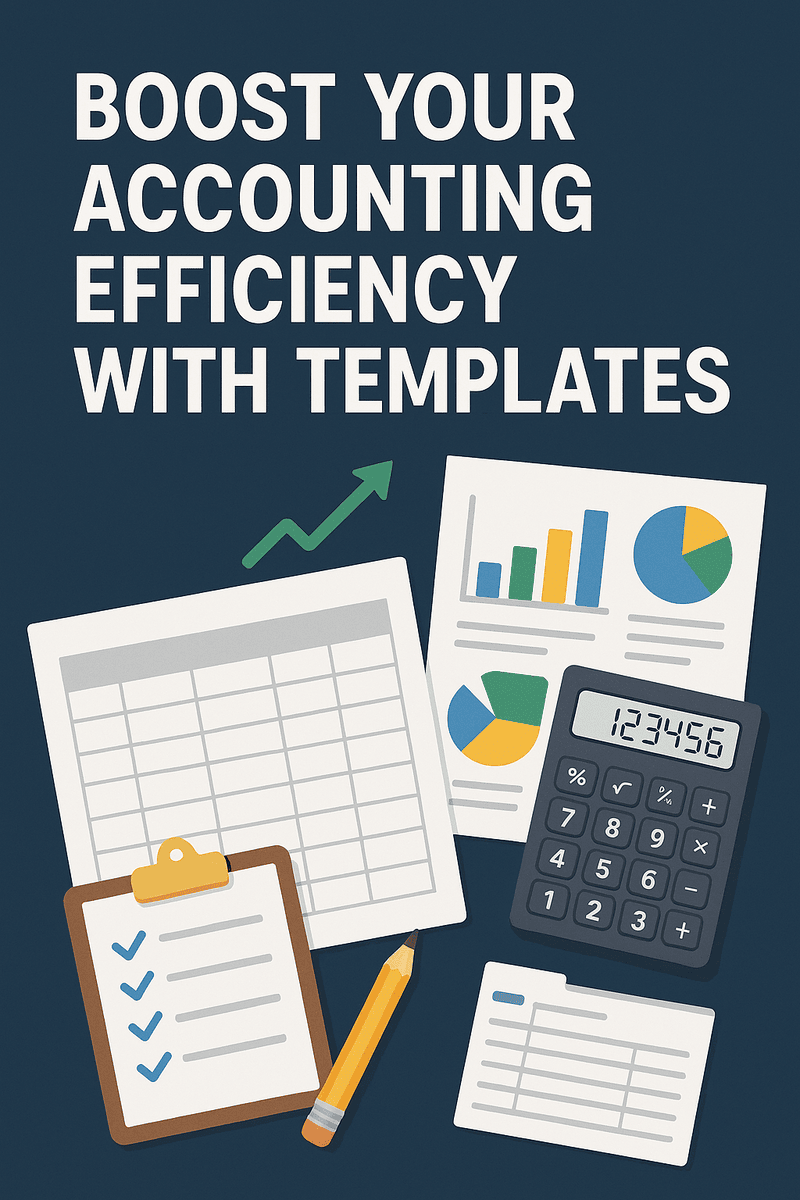
  • Boost Your Accounting Efficiency with Templates

    Boost Your Accounting Efficiency with Templates

    Are you tired of crafting financial reports from scratch? Looking to save time and reduce errors? At Lumini.net, we offer premium ready‑made accounting templates designed specifically for accountants and finance professionals. These templates streamline your daily tasks, improve accuracy, and free up precious time for analysis and strategy.


    Why Accountants Love Ready‑Made Templates


    • Time-saving automation
      Pre‑built formulas calculate totals, margins, and variances automatically—no manual entry, no errors.


    • Professional formatting
      Standardized, clean layouts make presentation to clients or management a breeze.


    • Fully customizable
      Tweak categories, add formulas, adapt styles to match your firm’s branding or specific reporting needs.


    Spotlight on Our Best‑Selling Templates


    • Profit & Loss Statement Template – a complete, Excel‑based workbook with monthly & yearly comparison, built‑in charts, and customizable categories. Ideal for both small business clients and internal financial reporting.
      Buy Profit & Loss Template on Lumini.net


    • Cash Flow Forecast & Statement Template – includes built-in 12‑month forecast models, categorization by operating, investing, and financing activities, and dashboard visualizations.
      Buy Cash Flow Template on Lumini.net


    How These Templates Simplify Your Daily Workflow


    • Cut down preparation time
      No need to build formulas or chart dashboards—templates come ready to use.


    • Reduce errors
      Carefully tested formulas mean fewer mistakes and more trust in results.


    • Ensure consistency
      Use the same structure for every client or department, building a unified reporting approach.


    • Focus on analysis
      With manual tasks eliminated, concentrate on insights: what the numbers mean and how to optimize.


    Quick Start Guide

    Step

    Action

    1.

    Visit Lumini.net and browse our Business & finance section.

    2.

    Choose the template(s) that match your needs.

    3.

    Download instantly in Excel format.

    4.

    Customize categories, add your company’s logo, and input data.

    5.

    Review dashboard insights and export PDF/Excel reports.

    6.

    Use consistent, branded financial statements for presentations or filings.


    Combining multiple templates – provides a comprehensive financial overview. At Lumini.net, all templates share a consistent structure, making integration smooth and hassle-free.


    Ready to Simplify Accounting?


    Explore our premium templates now:

    • Profit & Loss Statement Template
    • Cash Flow Forecast & Statement Template
    • Budget Planner & Variance Analysis


    Upgrade your accounting process, reduce manual work, and focus where it matters most—growing your business and guiding clients.

    Discover more practical tools at Lumini.net today!